This is not just a wellness trend. Mindfulness is a practical, research-backed way to manage stress, train your attention, and feel more in control of your own mind.
Mindfulness and meditation get talked about a lot. You see them in wellness apps, corporate training sessions, and health magazines. And because they are everywhere, it is easy to write them off as trends or marketing language. But the science behind them is genuinely solid, and the practice itself is much simpler than most people imagine.
Here we will cover what mindfulness actually is, what the research says it does, how to get started with almost no effort, and what to realistically expect. No wellness jargon, no exaggerated claims.
Table of contents
| What mindfulness actually means |
| What the science really says |
| How meditation helps your mind and body |
| Common myths about meditation |
| How to start with just 5 minutes a day |
| Other simple forms of mindfulness |
| What to realistically expect |
| When mindfulness is not enough |
What mindfulness actually means
Mindfulness is simply the practice of paying attention to the present moment without immediately judging it. That sounds easy, but in real life most of us spend very little time in the present. Our minds are usually replaying the past, planning the future, or drifting through worry and distraction without us even noticing.
Meditation is the most common way to train this kind of attention. It usually involves focusing on something steady, like the breath, physical sensations, or a repeated phrase, and gently returning to that focus whenever your mind wanders. Which it will. That is completely normal and is actually part of the practice.
“Mindfulness is not about emptying your mind. Thoughts will still come. The practice is learning to notice them without getting pulled along by every single one.”
This shift in how you relate to your own thoughts is a big part of why mindfulness is linked to better emotional regulation and lower perceived stress, according to the American Psychological Association.
Read More: https://www.apa.org/topics/mindfulness/meditation

What the science really says
Mindfulness has attracted serious and sustained scientific attention over the past few decades. It is not just studied by wellness researchers. Major institutions including the National Institutes of Health, the National Center for Complementary and Integrative Health, and the American Psychological Association have all reviewed the evidence.
Here is what the research most consistently supports:
- Stress reduction is the strongest and most replicated finding across multiple reviews and study types
- Anxiety relief, particularly in people with elevated anxiety levels who practice regularly over several weeks
- Improved emotional balance, including better ability to regulate mood and respond rather than react
- Support for people with depression, particularly through structured programs like Mindfulness-Based Cognitive Therapy
- Better sleep quality in people who practice consistently, partly through reduced evening mental activity
- Some support for pain management, though results here are more variable
Peer-reviewed research published in journals including Frontiers in Psychology and through PubMed Central also supports the role of mindfulness-based programs in improving mental health outcomes in specific groups, including students and people dealing with ongoing psychological stress.
Important context
The research is real and encouraging, but it is also honest about limitations. Most studies on mindfulness involve relatively small samples, short time periods, and self-reported outcomes. The effects are genuine but are typically modest rather than dramatic, and they build over time with consistent practice.

How meditation actually helps
One of the most practically useful things mindfulness does is create a gap between something happening and your response to it. Most of us react to stressful things very quickly. A difficult message, an unexpected problem, a frustrating comment, and we are already feeling the emotion and responding before we have had a chance to think.
Mindfulness practice trains that pause. Over time, you get slightly better at noticing a feeling arising before acting on it. That small delay makes a real difference in how you handle stress, conflict, and difficult emotions day to day.
Some research also suggests that regular meditation may be associated with changes in how the brain handles attention and emotional regulation. Studies have found differences in brain activity and structure in experienced meditators compared to non-meditators, particularly in areas associated with self-awareness and stress response. The exact mechanisms are still being studied, but the direction of the evidence is consistent.
Read More: https://www.nccih.nih.gov/health/meditation-and-mindfulness-effectiveness-and-safety
Common myths about meditation
| Myth | Reality |
| You have to empty your mind completely. | Thoughts will always come. The practice is noticing them and returning to your focus, not stopping them entirely. |
| You need to meditate for at least 30 minutes for it to work. | Research-based guidance favors short, consistent practice over rare long sessions. Five minutes daily is a genuinely useful start. |
| Meditation is a religious or spiritual practice only. | While meditation has roots in various traditions, the secular forms studied scientifically require no particular belief and are accessible to everyone. |
| If your mind wanders, you are doing it wrong. | Mind-wandering is expected and normal. Noticing the wander and returning to focus is literally the exercise. It is not a failure, it is the practice. |
How to start with just 5 minutes a day
You do not need an app, a course, a cushion, or a quiet room. The barrier to starting is genuinely lower than most people think. Here is a simple routine backed by research-based guidance from the NIH:
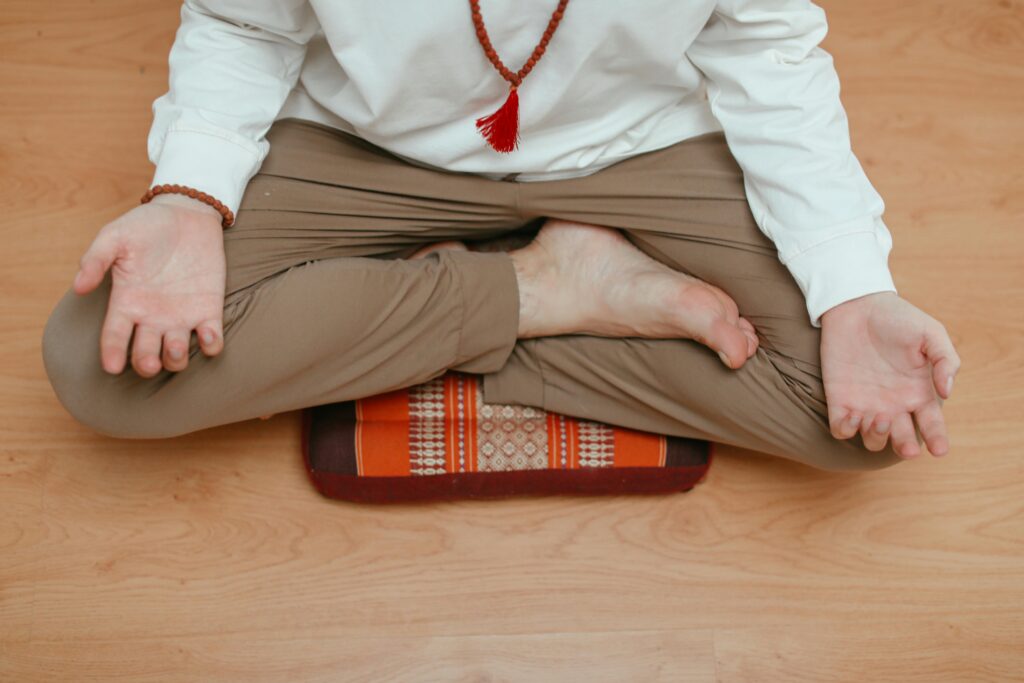
- Find a comfortable position. Sitting in a chair with your feet flat on the floor works perfectly. You do not need to sit cross-legged on the floor.
- Focus on your breath. Pay attention to the physical sensation of breathing. The air coming in, the slight pause, the air going out. You are not trying to control it, just noticing it.
- When your mind wanders, gently bring it back. This will happen within seconds at first. That is completely fine. Each time you notice and return, you are doing the practice correctly.
- Start with 5 minutes and build slowly. Set a timer and just sit. After a few weeks, you may naturally want to extend it, but there is no obligation to do so.
Best time to practice
Most people find mornings work best because the mind has not yet accumulated the day’s distractions. But the best time is honestly whichever time you will actually do it consistently. Evening practice can also help with winding down before sleep.
Other simple forms of mindfulness
Breath-focused sitting meditation is just one entry point. Mindfulness can be built into ordinary activities that you are already doing every day. These forms are particularly useful for people who find formal sitting practice difficult to maintain:
- Body scan, where you slowly move your attention through different parts of the body, noticing sensations without trying to change them
- Mindful walking, where you focus on the physical experience of walking rather than letting your mind wander through your to-do list
- Eating one meal a day without your phone, TV, or other distractions, paying attention to taste, texture, and pace
- A few slow, intentional breaths before responding to a stressful situation, an email, or a difficult conversation
These practices work because they fit into your existing life rather than requiring a special block of time or setup.
What to realistically expect
Mindfulness is not a fast fix, and it does not feel dramatic for most people. Some people notice a slight sense of calm after even a single session. For many others, the benefits are subtle at first and become more apparent after several weeks of consistent practice.
Think of it like physical exercise. One session does not transform your fitness, but regular sessions over weeks and months produce real, measurable change. The same logic applies here. The APA notes that the effects of mindfulness become more noticeable when practice becomes part of a genuine routine rather than something done occasionally when stress peaks.
When mindfulness is not enough
Important
Meditation and mindfulness can be valuable tools for mental well-being, but they should not replace professional treatment for serious anxiety, depression, trauma, or other diagnosed mental health conditions. The most effective approach for serious conditions is to use mindfulness as a supportive practice alongside proper clinical care, not as a substitute for it. If you are struggling significantly, speak with a healthcare professional.
Used as one part of a broader approach that includes good sleep, regular movement, healthy routines, and professional support when needed, mindfulness can be a genuinely useful addition to how you manage daily stress and emotional well-being.
Where to start this week
Pick one of these and try it for the next seven days. Just one.
- 5 minutes of breath focus each morning
- One meal eaten without screens this week
- A slow body scan before sleep tonight
- Three deep breaths before your next stressful moment
- A 10-minute mindful walk without headphones
Final thought
Mindfulness and meditation are not magic. They are not going to solve every problem or eliminate stress from your life. What they can do, with consistent and realistic practice, is help you respond to life a little more thoughtfully and a little less reactively. For most people, that shift alone is worth the five minutes a day it takes to build.
The science supports it. The barrier to starting is almost zero. The only thing left is to try.
Mindfulness is just one piece of a healthier lifestyle. Explore more such articles from OneCoreHub on sleep, nutrition, fitness, and well-being to build habits that support lasting health.
This article is for general education and is not a substitute for personalized medical or mental health advice. If you’re managing anxiety, depression, or another mental health condition, it’s worth talking to a therapist or doctor about how mindfulness practices might fit alongside your care.